William Butler Yeats, uno dei più grandi poeti del 20° secolo, nacque a Sandymount, (vicino a Dublino, in Irlanda) il 13 giugno 1865. Nel 1923 ricevette il Premio Nobel per la Letteratura.
“Monetina di bronzo”
Sussurrai “Sono troppo giovane”
e poi “Sono abbastanza vecchio”;
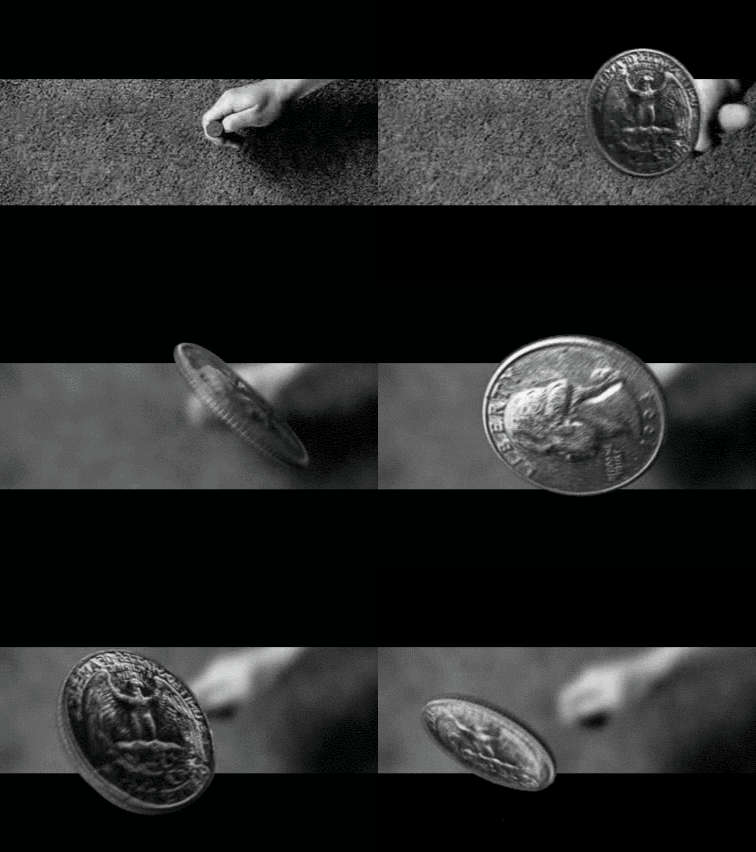
pertanto lanciai un penny,
per scoprire se potevo amare.
“Va’ e ama, va’ e ama, giovanotto,
se la tua dama è giovane e bella”.
Ah, monetina, monetina scura,
sono intrappolato negli anelli dei suoi capelli.
Oh l’amore è cosa contorta,
non c’è nessuno abbastanza saggio
da scoprire tutto ciò che racchiude,
perché penserebbe all’amore
fino a quando le stelle non siano fuggite
e le ombre divorato la luna.
Ah monetina, monetina scura,
non si può iniziare troppo presto.
[ Traduzione di Luisa Zambrotta ]
“Brown Penny/Monetina di bronzo” faceva parte del suo volume “The Green Helmet and Other Poems”, pubblicato nel 1910.
Questa poesia, il cui tema è l’amore associato a gioia, dubbio, incertezza e paura, parla di un giovane che si chiede se sia o meno in un’età in cui può veramente apprezzare e sperimentare l’amore.
Vorrebbe innamorarsi ma non è sicuro se sia una cosa saggia, anche se è innamorato, ritrova intrappolato tra i ricci della sua amata.
I suoi sentimenti contrastanti, i dubbi sulla sua maturità lo inducono a lanciare una monetina sperando di trovare la risposta alla sua domanda se sia pronto o no a sperimentare e comprendere l’amore.
Lanciando il penny, si sta affidando alla sorte, come succede alle persone quando si innamorano. Non sappiamo come andrà a finire e stiamo mettendo a rischio cuore e vita per amore.
Il penny risponde esattamente quello che voleva sentire, esortandolo a seguire i desideri del suo cuore.
Ma ora il tono cambia e da ottimista si fa più incerto, poiché l’amore è una “cosa contorta“, imprevedibile e confuso, e tutti i nostri sforzi per cercare di capirlo sono inutili perché “non c’è nessuno abbastanza saggio”. C’è troppo da esplorare e l’amore sembra quasi una lotta, una sfida eterna (” fino a quando le stelle non siano fuggite /e le ombre inghiottito la luna”).
Ma alla fine, la poesia ritrova l’ottimismo iniziale, incoraggiandolo a intraprendere il percorso dell’amore, nonostante tutti gli ostacoli e le avversità: nessuno è troppo giovane o troppo vecchio per amare … ci vuole una vita per capirlo.
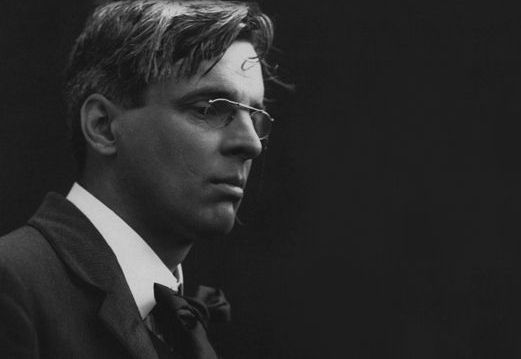
William Butler Yeats, one of the greatest poets of the 20th century, was born at Sandymount (near Dublin, Ireland) on 13 June 1865. In 1923 received the Nobel Prize for Literature.
“Brown Penny”
I whispered, “I am too young,”
And then, “I am old enough”;
Wherefore I threw a penny
To find out if I might love.
“Go and love, go and love, young man,
If the lady be young and fair,”
Ah, penny, brown penny, brown penny,
I am looped in the loops of her hair.
Oh, love is the crooked thing,
There is nobody wise enough
To find out all that is in it,
For he would be thinking of love
Till the stars had run away,
And the shadows eaten the moon.
Ah, penny, brown penny, brown penny,
One cannot begin it too soon.
“Brown Penny” was part of his volume “The Green Helmet and Other Poems” published in 1910.
This poem, whose theme is love and its association with joy, doubt, uncertainty and fear, is about a young man who wonders whether or not he is at an age where he can truly appreciate and experience love.
He would like to fall in love but is unsure if he should, although he is in love, finds himself tangled in his beloved’s hair
His conflicting feelings, his doubts about his maturity, lead him to flip a coin hoping to find the answer to his question of whether he is ready to experience and understand love or not.
By tossing the penny, he is taking a chance, as people do when they fall in love. We don’t know how it will end and are risking our hearts and lives for the sake of love.
The penny replies exactly what he wanted to hear, urging him to follow the desires of his heart.
But now the tone changes from optimistic to uncertain, since love is a “crooked thing” , unpredictable and confusing, and all our efforts to try to understand it are useless because “there is nobody wise enough”. There is too much to explore and love seems almost a struggle, an eternal one (“Till the stars had run away/ And the shadows eaten the moon.”)
But in the end, the poem rediscovers the initial optimism, encouraging him to undertake the path of love, despite all the obstacles and adversities: no one is too young or too old to love… and it takes a lifetime to understand.
[ SiteLink : Words and Music and Stories ]
[ Gif : bestanimations.com ]




 MasticadoresItalia
Scrivi una risposta a equipsblog Cancella risposta