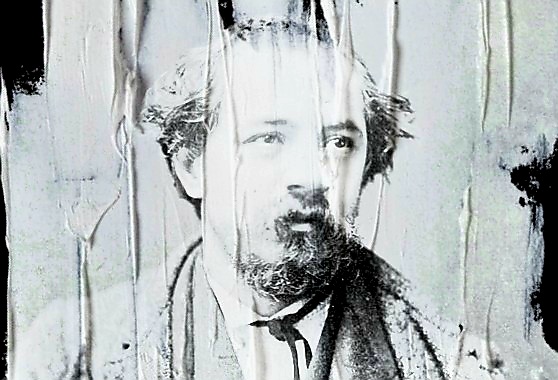
Il pittore italiano Tranquillo Cremona (10 aprile 1837 – 10 giugno 1878) nacque a Pavia, da giovane visse a Venezia per poi trasferirsi a Milano dove divenne l’esponente per eccellenza della “Scapigliatura” lombarda. Questo movimento comprendeva poeti, scrittori, musicisti, pittori e scultori ed era caratterizzato da atteggiamenti bohémien. Il termine Scapigliatura è l’equivalente italiano del francese “bohème” (bohémien), e “Scapigliato” significa letteralmente “scarmigliato” o “spettinato”.
Quegli artisti avevano tendenze ribelli, e anti-accademiche e successivamente anarchiche. Nella pittura preferivano soggetti legati alla vita reale e quotidiana piuttosto che alle grandi riproduzioni storiche. I loro temi prediletti erano
il ritratto, le figure femminili e le scene di genere, e talvolta arrivavano alla dissoluzione della forma per un libero rapporto tra luce e colore.
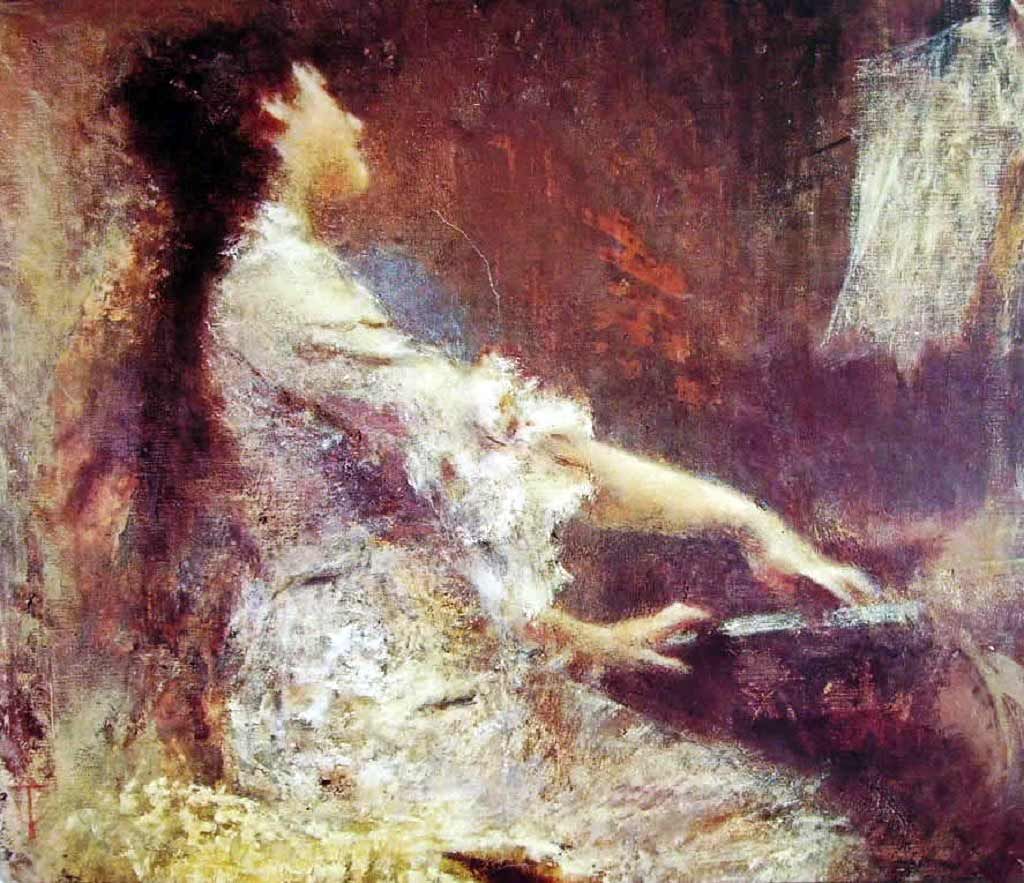
Le opere di Cremona consistevano principalmente in ritratti, soprattutto femminili, in uno stile in cui si nota la ricerca di effetti vaporosi e morbidi, ottenuti con il prevalere dello sfumato sul contorno.
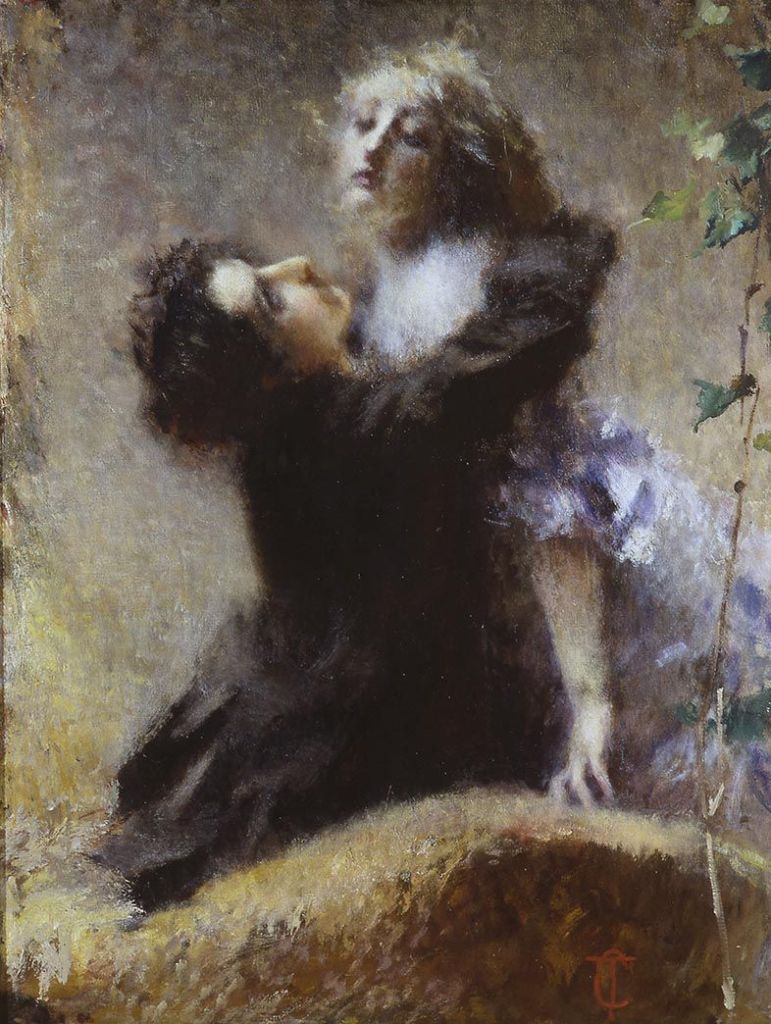
La sua ultima opera fu “L’edera” (1878): un dipinto simbolista dedicato alla fedeltà eterna delle promesse d’amore che rappresenta due amanti in primo piano e la pianta sempreverde, avvinghiata del muro.
La situazione non è nitida e anche il genere dei due amanti non è ben definibile: alcuni vi scorgono due donne a testimonianza dell’anticonformismo del pittore, altri dicono che si tratti del musicista Alfredo Catalani e Lisetta Cagnoli, cognata di Tranquillo Cremona.
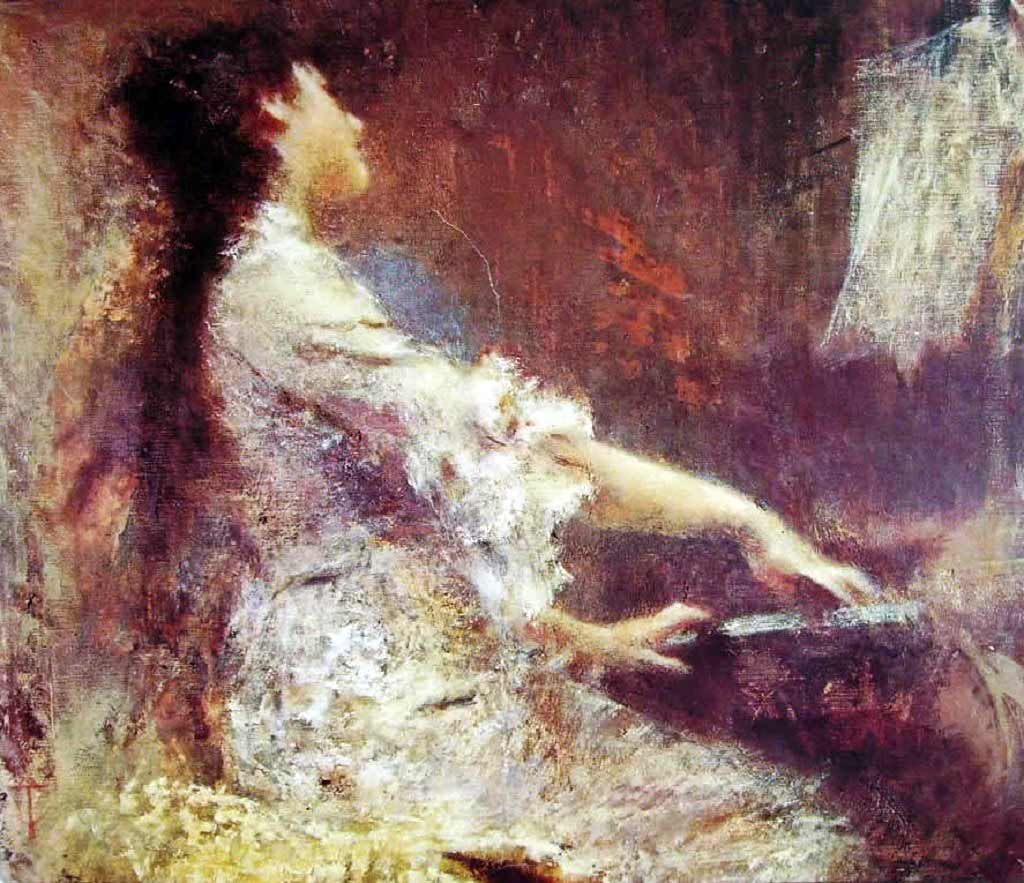
In questo come in altri dipinti ottenne i suoi caratteristici effetti di sfumature e luce utilizzando molto colore bianco.
Dopo un primo intervento con i pennelli, soleva terminare con le dita, per sfumare i contorni ed espandere la luce: una tecnica che gli permetteva di ottenere quei giochi di luce, quelle atmosfere sognanti fatte di forme indefinite, come avvolte da un vapore, che ricordano le stazioni di Monet.
Fu il bianco utilizzato con questa tecnica che gli causò il saturnismo, cioè l’avvelenamento da piombo. Infatti la biacca, il suo bianco preferito, è un pigmento inorganico altamente tossico costituito da carbonato basico di piombo.
Fu così che, tra dolori sempre più frequenti e insopportabili, Cremona morì perché il piombo delle biacche, infiltrandosi nel sangue, aveva finito per causargli la paralisi degli intestini. Aveva solo 41 anni.
Il carbonato basico di piombo, che poteva causare saturnismo, l’antico nome dato all’avvelenamento da piombo, un nome derivante da “Saturno”, il dio romano associato a questo metallo dagli alchimisti.
La biacca, un bel bianco caldo, con una grana molto sottile, quasi vellutata, era il principale pigmento bianco della pittura a olio classica europea. Fu poi soppiantato nell’uso artistico dal bianco di titanio, non solo perché ha una forza colorante molto più elevata della biacca o perché sotto l’azione dell’idrogeno solforato la biacca annerisce alterando i colori, ma soprattutto a causa delle restrizioni commerciali, dovute alla sua tossicità, che rendevano difficile per gli artisti ottenere la biacca in quantità sufficienti.
Il bianco di piombo veniva prodotto già nel IV secolo a.C. in un processo descritto da Plinio il Vecchio, Vitruvio e dall’antico autore greco Teofrasto.
Secondo l’antica ricetta, delle lamine di piombo venivano poste in vasi di terracotta porosa, contenenti aceto. I vasi venivano sovrapposti e coperti da letame in fermentazione che produceva calore e anidride carbonica.
Dopo qualche tempo, l’acido acetico reagiva con il piombo superficiale formando una crosta di piombo bianco sulle lamine, che veniva separata, lavata e macinata per ottenere il pigmento.
Questo era un processo estremamente pericoloso poiché il bianco di piombo è un composto velenoso se inalato o ingerito.
I testi medievali mettevano già in guardia dal pericolo di “apoplessia, epilessia e paralisi“. La vernice al piombo è molto pericolosa. Può causare danni al sistema nervoso, ritardi nella crescita, danni ai reni . È molto nociva per i bambini perché, avendo un sapore dolce, li incoraggia a mettere in bocca giocattoli colorati al piombo. La vernice al piombo può causare anche problemi riproduttivi ed è anche considerata un probabile cancerogeno.
Il 19 novembre 1921 , a seguito dell’intervento dell’Organizzazione internazionale del lavoro, parecchi stati stipularono la Convenzione sulla Biacca (White Lead Painting) che ne vieta definitivamente l’utilizzo.
Questa convenzione fu ratificata in date diverse dai vari stati che la sottoscrissero . L’Italia lo fece nell’ottobre 1952.
Ancora nel 2017 molte nazioni leader a livello mondiale, inclusi Stati Uniti, Regno Unito, Germania, Giappone, Cina e India, non l’avevano ratificata.
Nota Finale
La Cerussa (un mix di bianco di piombo, acqua e aceto) era un cosmetico usato come sbiancante per la pelle molto in voga nel XVI – XVII secolo, amato per la sua opacità e la texture liscia e satinata ottenuta con oli essiccabili.
Tuttavia l’uso della biacca risale addirittura all’antico Egitto, dove veniva impiegata come fondotinta; nel teatro antico la biacca era uno dei trucchi di scena più comuni.
Nell’opera Manon Lescaut di Puccini c’è un riferimento alla “cerussa”
Tranquillo Cremona (10 April 1837 – 10 June 1878) was an Italian painter born in Pavia. As a young man he lived in Venice and then he moved to Milan where he became the exponent par excellence of the Lombard “Scapigliatura”. This movement included poets, writers, musicians, painters and sculptors and was characterized by bohemian attitudes The term Scapigliatura is the Italian equivalent of the French “bohème” (bohemian), and “Scapigliato” literally means “unkempt” or “dishevelled”. Those artists had rebellious, anti-academic and later anarchic tendencies. In painting they preferred subjects connected to real and daily lifer to great historical re-propositions. Their favourite themes were portraits, female figures and the genre scenes , and sometimes arrived at the dissolution of the form for a free relationship between light and colour.
Cremona’s works consisted mainly of portraits, above all women, in a technique searching for fluffy and soft effects, a sort of windswept style.
His last work was “L’edera – The Ivy,” (1878): a symbolist painting representing the eternal fidelity of the promises of love with two lovers in the foreground and the evergreen plant, clinging to the wall. The situation is not clear and even the gender of the two lovers is not well defined: some see two women, testifying to the painter’s nonconformity , others say that the musician Alfredo Catalani and Lisetta Cagnoli, Cremona’s sister-in-law are represented.
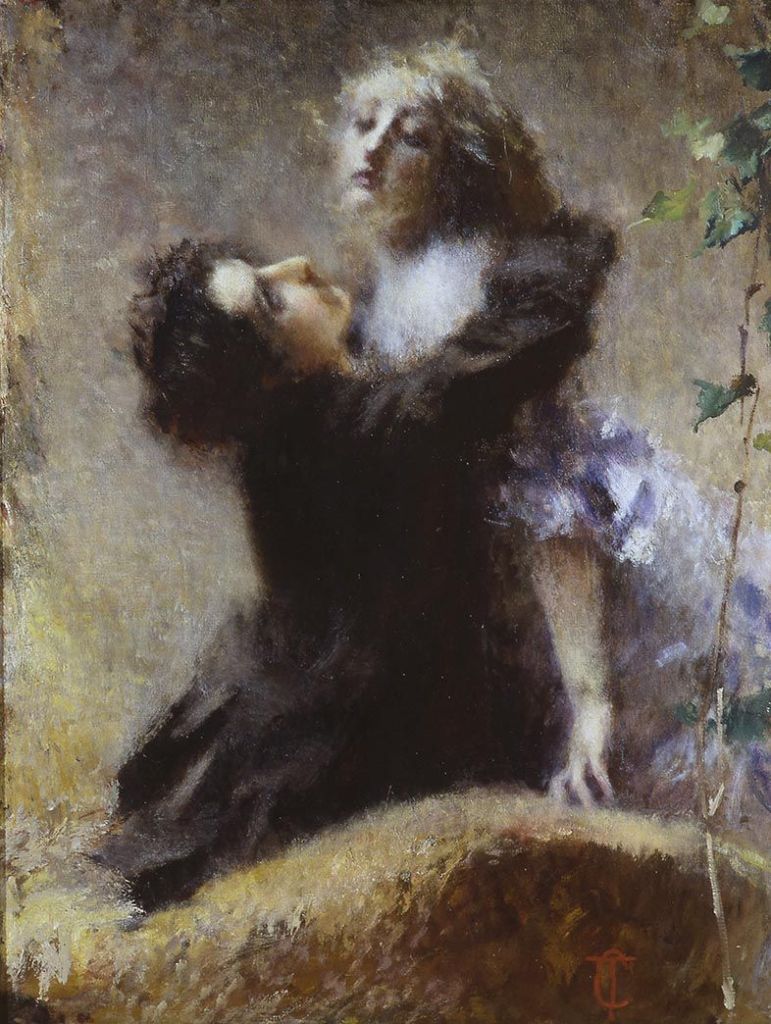
In this and his other painting he obtained his distinctive effects of light and nuance by making a large use of the colour white.
After a first intervention with brushes, he finished the works with his fingers, to shade the contours and expand the light: a technique that allowed him to obtain those interplays of light and shadow, those dreamy atmospheres and indefinite shapes, as if wrapped in a mist, reminiscent of Monet’s stations.
He was killed by that white.
It was the white colour used with this technique that killed him, because it caused his saturnism, i.e. lead poisoning. White lead, his favourite white, is a highly toxic inorganic pigment obtained from basic lead carbonate.
Thus it was that, amidst increasingly frequent and unbearable pains, Cremona died because the lead from the whites, infiltrating the blood, caused paralysis of the intestines. He was only 41 years old.
The basic carbonate of lead, which could cause saturnism, the ancient name of lead poisoning, a name deriving from “Saturn”, the Roman god associated with this metal by the alchemists.
White lead, a warm white, with a very thin, almost velvety grain size, was the principal white pigment of classical European oil painting.
It was then supplanted in artistic use by titanium white, not only because it has much higher tinting strength than white lead, or because under the action of hydrogen sulphide white lead blackens, altering the colours but also because of commercial restrictions, due to its toxicity, which made white lead difficult for artists to obtain in sufficient quantities.
It was produced as early as the 4th century BC in a process described by Pliny the Elder, Vitruvius and the ancient Greek author Theophrastus.
According to the ancient recipe, strips of metallic lead were placed in porous earthenware pots, containing vinegar. These jars were stacked and covered with fermenting manure which produced heat and carbon dioxide.
After some time , the acetic acid reacted with the surface lead to form a crust of white lead on the sheets, which was separated, washed, and ground to obtain the pigment. This was an extremely dangerous process since white lead is a poisonous compound if inhaled or ingested.
Medieval texts already warned of the danger of “apoplexy, epilepsy and paralysis” from working with lead white.
Lead paint is really dangerous. It can cause nervous system damage, growth retardation, kidney damage. It is very hazardous for children because it has a sweet taste, so this encourages them to put lead coloured toys in their mouth. Lead paint can also cause reproductive problems, and is also considered a probable carcinogen.
On 19 November 1921 the White Lead (Painting) Convention adopted by the General Conference of the International Labour Organisation, prohibited the use of white lead in paint-
This convention was ratified on different dates by the various states that signed it. Italy did it in October 1952. As of 2017 many leading nations, including the United States, the United Kingdom, Germany, Japan, China and India still did not ratify it.
Final Note
Ceruse (a mix of lead white, water and vinegar) was a cosmetic used as a skin whitener and it very popular in the 16th and 17th centuries, loved for its opacity and smooth, satin texture obtained with dryable oils.
However, the use of white lead dates back to ancient Egypt, where it was employed as a foundation; in ancient theatre white lead was one of the most common stage make-ups.
In Puccini‘s Manon Lescaut there is a reference to the “cerussa”
[ SiteLink : Words and Music and Stories ]



 MasticadoresItalia
Lascia un commento